


Hey there, fellow bike enthusiasts! I'm a supplier of handle switches for bikes, and today I'm gonna take you on a deep - dive into how these nifty little components work.
Let's start with the basics. A handle switch on a bike is like the command center at your fingertips. It allows you to control various functions of your bike without having to take your hands off the handlebars, which is super important for safety while you're cruising down the road or tearing up the trails.
The Anatomy of a Handle Switch
First things first, let's break down what a handle switch is made of. There are typically a few key parts. The housing is the outer shell that protects all the internal components. It's usually made of a durable plastic or metal to withstand the vibrations, impacts, and weather conditions that a bike goes through.
Inside the housing, there are electrical contacts. These are like the bridges that allow electricity to flow when you press a button or flip a switch. When you make a connection, it sends a signal to the corresponding part of the bike. For example, when you hit the turn - signal button, the contacts close, and an electrical current is sent to the turn - signal lights, making them blink.
There are also the buttons or levers that you interact with. These are designed to be easy to reach and operate. They have a certain amount of resistance so that you can feel when you've pressed them properly, but not so much that it's difficult to use, especially when you're wearing gloves.
How the Switching Mechanism Works
The most common type of switching mechanism in a bike handle switch is the mechanical switch. When you press a button, it physically moves a piece of metal inside the switch. This metal piece makes contact with other conductive parts, closing an electrical circuit.
Let's say you've got a start switch on your handlebar. When you press it, a spring - loaded lever is pushed down. As it moves, it touches two metal contacts that are normally separated. Once they touch, electricity can flow from the battery to the starter motor, and your bike starts up.
Another type is the momentary switch. This is used for things like the horn. When you press the horn button, it only makes the connection as long as you're holding the button down. As soon as you release it, the contacts separate, and the horn stops blaring.
There are also multi - position switches. These can be used for functions like high - and low - beam headlights. You can move a lever to different positions, and each position connects different electrical contacts, allowing you to switch between different lighting modes.
Different Functions and Their Switching
Turn Signals
Turn signals are one of the most important functions controlled by the handle switch. When you want to make a turn, you simply flip the turn - signal lever. Inside the switch, a set of contacts are activated. This sends a signal to the turn - signal relay, which then controls the flow of electricity to the front and rear turn - signal lights.
The relay is like a traffic cop for the electrical current. It makes sure that the lights blink at the right intervals, usually around 60 - 120 blinks per minute. Once you've made your turn, you can either manually turn off the signal or use a self - canceling feature, which is another cool thing controlled by the handle switch system.
Headlights
Controlling the headlights is also done through the handle switch. You've got the option to turn them on and off, and switch between high and low beams. The low - beam setting is used for normal driving, providing a focused and downward - facing light that doesn't blind oncoming drivers. The high - beam setting gives you a more powerful, far - reaching light for when you're on dark roads with no oncoming traffic.
When you switch between the two, the handle switch changes the electrical connection to different filaments in the headlight bulb or to different lighting modules if it's an LED headlight.
Horn
The horn is a simple yet crucial safety feature. When you press the horn button on the handle switch, it completes a circuit that sends electricity to the horn itself. The horn then uses this electrical energy to create a loud sound. Some horns are electromagnetic, where the electrical current creates a magnetic field that vibrates a diaphragm, producing the honking sound.
Electrical Considerations
Bike handle switches are part of a larger electrical system. The power for these switches usually comes from the bike's battery. The battery provides a direct current (DC) voltage, typically 12 volts in most motorcycles.
There are also fuses in the electrical system to protect the handle switches and other components from electrical overloads. If there's a short - circuit or too much current flowing through the system, the fuse will blow, breaking the circuit and preventing damage to the switch and other parts of the bike.
Wiring is another important aspect. The wires that connect the handle switch to the rest of the bike need to be properly insulated and routed. They need to be able to handle the electrical current without overheating or getting damaged. Poorly installed or damaged wiring can lead to all sorts of problems, like intermittent signals or even electrical fires.
Our Product Offerings
As a supplier, I've got a great range of handle switches and related products. For example, we have the 22mm 7/8" Push/pull Motorcycle Throttle Fuel Oil Handlebar Control Grips with Cable And Start Switch Button Silver. This is a high - quality set that combines throttle control with a start switch. The push - pull design gives you precise control over the fuel flow, and the silver finish looks great on any bike.
We also offer the 22mm Standard Motorcycle Twist Quick Throttle Accelerator Grip with Throttle Handle Cable For Off - road Dirt Bike. This is perfect for off - road enthusiasts. The quick - throttle design allows for rapid acceleration, and the cable is strong and reliable.

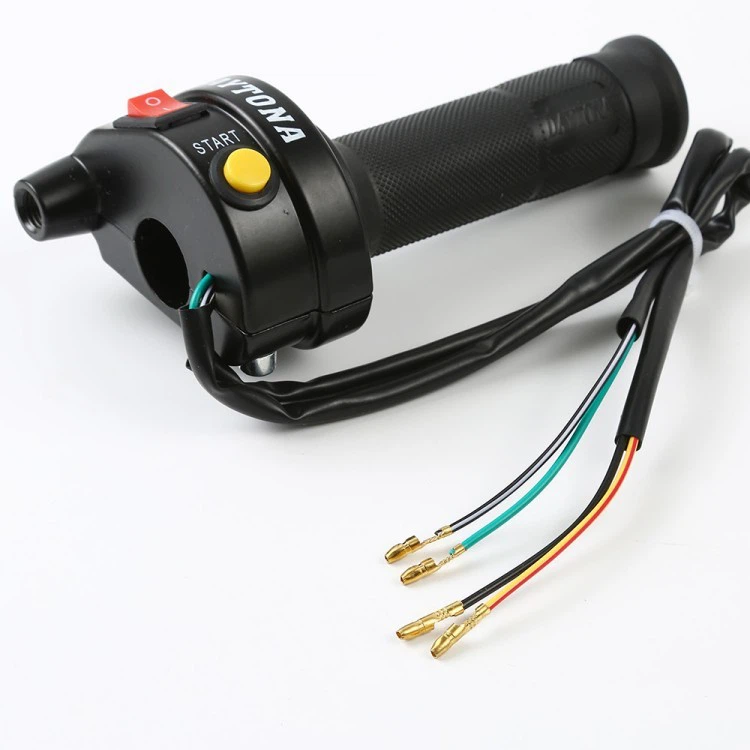
And then there's the 22mm Standard Motorcycle Carburetor Twist Quick Throttle Handle Grip Throttle Cable Acceleration For Off - road Dirt Bike. It's specifically designed for bikes with carburetors, providing smooth and efficient throttle control.
Why Choose Our Products
Our handle switches and related components are made with high - quality materials. We use the latest manufacturing techniques to ensure durability and reliability. Whether you're a daily commuter or a weekend warrior hitting the trails, our products are built to last.
We also offer excellent customer service. If you have any questions about installation, compatibility, or just need some advice on which product is right for you, our team is here to help.
Contact Us for Procurement
If you're in the market for handle switches or any of our other bike components, we'd love to hear from you. Whether you're a bike shop looking to stock up on inventory or an individual rider looking to upgrade your bike, we can work with you. Reach out to us to start a conversation about your procurement needs. We're committed to providing you with the best products and the best service at competitive prices.
References
- Motorcycle Electrical Systems Manual, various editions
- Bike Component Manufacturing Industry Reports
- Interviews with bike mechanics and engineers


