


As a fixed support supplier, I've been deeply involved in understanding the intricate wind - load resistance requirements for fixed supports. These requirements are not just technical specifications; they are crucial factors that determine the safety, durability, and functionality of our products.
Understanding Wind Loads
Wind loads are the forces exerted by the wind on a structure or an object. When it comes to fixed supports, these loads can have a significant impact. Wind loads are influenced by several factors, including the wind speed, the shape and size of the support, and the surrounding environment.
The wind speed is perhaps the most obvious factor. Higher wind speeds generate greater forces. For example, in areas prone to hurricanes or strong gusts, the wind - load resistance requirements for fixed supports are much more stringent. The shape of the fixed support also plays a vital role. A support with a streamlined shape will experience less wind resistance compared to one with a bulky or irregular shape. Additionally, the surrounding environment can either amplify or reduce the wind loads. For instance, a fixed support located in an open field will face more direct wind forces than one placed in a sheltered area between buildings.
Importance of Wind - Load Resistance Requirements
Meeting the wind - load resistance requirements is of utmost importance for several reasons. Firstly, safety is a top priority. Fixed supports are often used to hold up various structures, such as bridges, buildings, or even motorcycles. If a support fails to withstand the wind loads, it can lead to catastrophic consequences, including the collapse of the supported structure and potential harm to people.
Secondly, durability is another key factor. Wind loads can cause continuous stress on the fixed supports over time. If the supports are not designed to handle these loads, they may experience fatigue, corrosion, or other forms of damage, which will significantly shorten their lifespan. This means that regular replacements will be necessary, leading to increased costs for the users.
Standards and Regulations
There are various standards and regulations in place to ensure that fixed supports meet the appropriate wind - load resistance requirements. These standards are developed by national and international organizations, such as the American Society of Civil Engineers (ASCE) and the International Organization for Standardization (ISO).
The ASCE, for example, provides detailed guidelines on how to calculate wind loads based on different geographical locations, building types, and support structures. These guidelines take into account factors like the basic wind speed, the exposure category of the site, and the importance factor of the structure. By following these standards, manufacturers can design and produce fixed supports that are safe and reliable.
Design Considerations for Wind - Load Resistance
When designing fixed supports for wind - load resistance, several considerations must be taken into account. Material selection is crucial. High - strength materials, such as steel or aluminum alloys, are often preferred due to their ability to withstand high stress. For example, in motorcycle fixed supports, Motorcycle Modified Cnc Parts Oil Pipe Clamp Honda General Aluminum Alloy Clamp For for Yamaha Xt660 Xt660r is made of aluminum alloy, which offers a good balance between strength and weight.
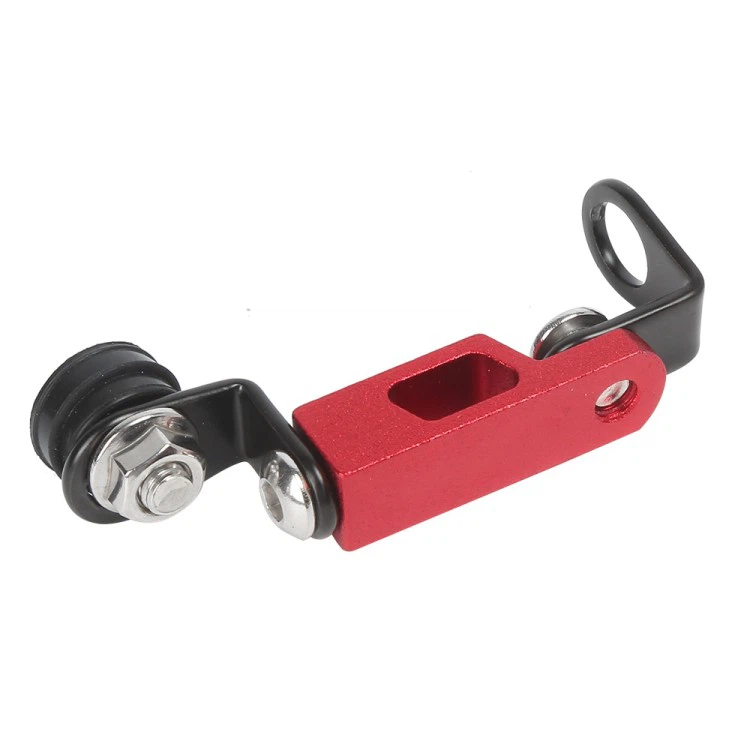
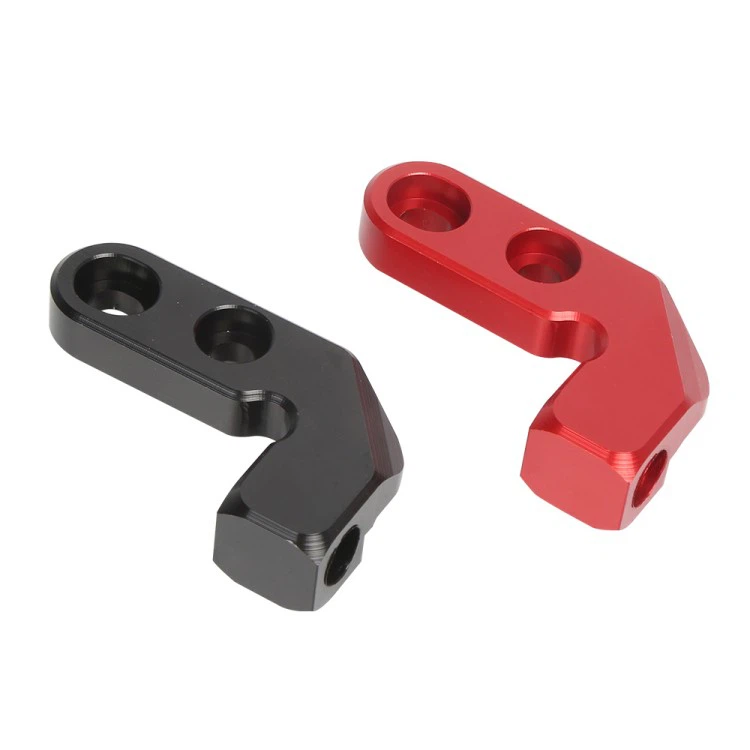
The design of the support's structure also matters. Reinforcements can be added to critical areas to increase the support's resistance to wind forces. For instance, brackets can be designed with additional ribs or gussets to enhance their strength. Moreover, the connection points between the support and the structure it is holding must be carefully designed to ensure that they can transfer the wind loads safely.
Testing and Certification
Before our fixed supports are released to the market, they undergo rigorous testing to ensure that they meet the wind - load resistance requirements. These tests are conducted in specialized laboratories using state - of - the - art equipment.
Dynamic and static load tests are commonly used to simulate different wind conditions. In a static load test, a constant force is applied to the support to measure its ability to withstand a steady wind load. In a dynamic load test, fluctuating forces are applied to mimic the effects of gusty winds. Only after passing these tests can our products obtain the necessary certifications, which serve as a guarantee of their quality and compliance with the standards.
Applications in Different Industries
Fixed supports with proper wind - load resistance are used in a wide range of industries. In the construction industry, they are used to support building facades, balconies, and other structural elements. In the energy sector, they are essential for holding up wind turbines, solar panels, and power transmission lines.
In the automotive and motorcycle industries, fixed supports are used to secure various components. For example, Bracket Stut Kopling Kawasaki Ninja R Rr Ss Xxz Racing Full Cnc New is a fixed support used in Kawasaki motorcycles. It needs to withstand not only the normal vibrations and forces during riding but also the wind loads, especially at high speeds. Another example is the Motorcycle Cnc Aluminum Alloy Oil Cup Bracket Adjustable Brake Pump Horn Oil Pot Bracket Modification Parts, which is designed to hold oil cups and other components securely while facing wind forces on the road.
Our Commitment as a Supplier
As a fixed support supplier, we are committed to providing high - quality products that meet or exceed the wind - load resistance requirements. We invest heavily in research and development to continuously improve our designs and manufacturing processes. Our team of experienced engineers and technicians ensures that every product is carefully designed, tested, and certified.
We also understand the importance of customization. Different customers may have different requirements based on their specific applications and environments. Therefore, we offer customized solutions to meet the unique needs of our clients. Whether it's a large - scale construction project or a small - scale motorcycle modification, we can provide the right fixed supports.
Conclusion
In conclusion, the wind - load resistance requirements for fixed supports are complex but essential. They are determined by various factors, including wind speed, shape, and surrounding environment. Meeting these requirements is crucial for safety, durability, and compliance with the standards.
As a reliable fixed support supplier, we take pride in our ability to produce high - quality products that can withstand the toughest wind conditions. If you are in need of fixed supports for your project, whether it's for construction, automotive, or any other industry, we invite you to contact us for a detailed discussion. We are ready to provide you with the best solutions and support to ensure the success of your project.
References
- American Society of Civil Engineers (ASCE). (20XX). Wind Load Provisions in Building Codes.
- International Organization for Standardization (ISO). (20XX). Standards for Structural Supports and Their Wind - Load Resistance.


