


As an oil cup supplier, I often get asked about the capacity of a typical oil cup. This is a crucial question, as the capacity determines how much oil can be stored and how often the cup needs to be refilled. In this blog post, I'll delve into the various factors that influence the capacity of oil cups, explore different types of oil cups and their typical capacities, and discuss how to choose the right capacity for your specific needs.
Factors Influencing Oil Cup Capacity
The capacity of an oil cup is not a one - size - fits - all specification. Several factors play a role in determining the appropriate capacity for a particular application:
Type of Equipment
The equipment in which the oil cup is used is a primary factor. For example, small, low - power devices like handheld power tools may require only a small amount of lubricating oil. These tools often have oil cups with capacities ranging from 10 to 50 milliliters. On the other hand, large industrial machinery, such as heavy - duty engines or large - scale manufacturing equipment, may need oil cups with capacities of several liters. The reason is that these machines have more moving parts that require a continuous supply of oil for smooth operation, and they operate for longer periods without frequent maintenance stops.
Frequency of Maintenance
If the equipment is regularly maintained, a smaller - capacity oil cup may be sufficient. Maintenance personnel can refill the oil cup during routine check - ups. However, if the equipment is in a remote location or difficult to access, a larger - capacity oil cup is preferable. This reduces the frequency of refilling, minimizing downtime and maintenance costs.
Oil Consumption Rate
The rate at which the equipment consumes oil is another critical factor. Some high - speed or high - friction applications consume oil more rapidly. For instance, a high - performance motorcycle engine may have a relatively high oil consumption rate due to the high - speed operation of its components. In such cases, an oil cup with a larger capacity is needed to ensure that there is always enough oil to lubricate the engine effectively.
Different Types of Oil Cups and Their Capacities
Standard Oil Cups
Standard oil cups are the most common type and are used in a wide range of applications, from household appliances to small industrial machines. These oil cups typically have capacities ranging from 50 to 250 milliliters. They are usually made of plastic or metal and are designed to be easily installed and refilled.

Large - Capacity Oil Cups
Large - capacity oil cups are used in heavy - duty industrial applications. They can have capacities ranging from 1 liter to 10 liters or more. These oil cups are often made of durable materials such as stainless steel to withstand the harsh conditions of industrial environments. They are commonly found in large engines, generators, and heavy - machinery.
Specialized Oil Cups
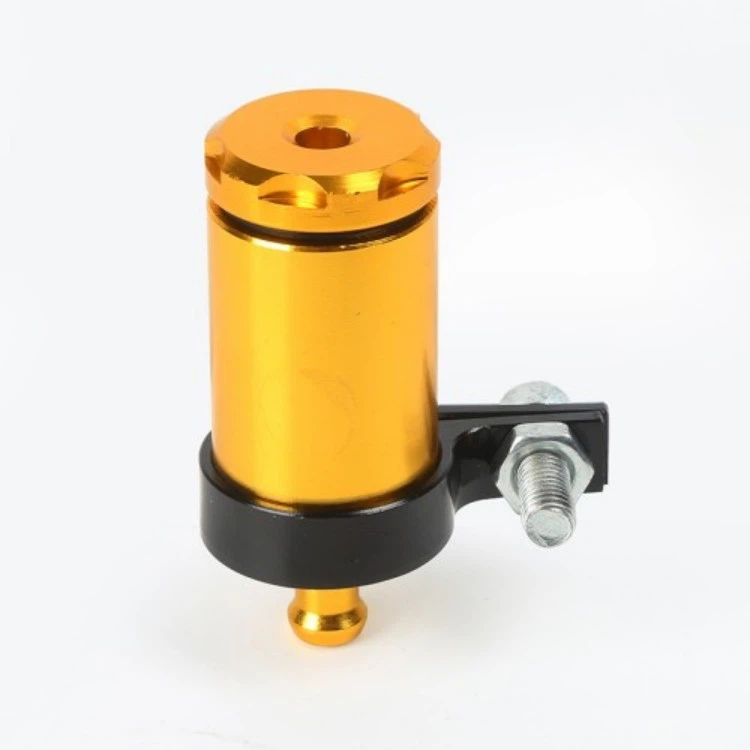
There are also specialized oil cups designed for specific applications. For example, Motorcycle Accessories Rear Brake Fluid Tank Oil Cup Reservoir Cover Cnc Aluminum For Universal is a type of specialized oil cup for motorcycles. These oil cups usually have capacities between 50 and 150 milliliters, depending on the model of the motorcycle and the requirements of its braking system.
Choosing the Right Capacity
When choosing the right capacity for an oil cup, it's essential to consider the factors mentioned above. Here are some steps to help you make the right decision:
Assess Your Equipment's Needs
First, understand the requirements of your equipment. Determine the type of equipment, its oil consumption rate, and the frequency of maintenance. If you're unsure, consult the equipment's manual or the manufacturer.
Consider the Operating Environment
The operating environment can also affect the choice of oil cup capacity. If the equipment is exposed to high temperatures or dusty conditions, it may consume oil more quickly, and a larger - capacity oil cup may be necessary.
Evaluate Cost - Benefit
Larger - capacity oil cups may be more expensive upfront, but they can save money in the long run by reducing maintenance frequency and downtime. Consider the overall cost - benefit analysis when making your decision.
Importance of Correct Capacity
Using an oil cup with the correct capacity is crucial for the proper functioning of the equipment. If the capacity is too small, the equipment may run out of oil, leading to increased friction, wear, and potential damage. On the other hand, if the capacity is too large, it may be wasteful and may also pose a risk of oil leakage or contamination.
Conclusion
In conclusion, the capacity of a typical oil cup varies widely depending on the type of equipment, frequency of maintenance, and oil consumption rate. As an oil cup supplier, I can offer a wide range of oil cups with different capacities to meet your specific needs. Whether you need a small - capacity oil cup for a handheld tool or a large - capacity one for heavy - duty industrial machinery, I can provide you with high - quality products.
If you're interested in purchasing oil cups or have any questions about choosing the right capacity for your application, please feel free to contact me for a detailed discussion. I'm here to help you make the best decision for your equipment's lubrication needs.
References
- "Handbook of Lubrication and Tribology: Volume II: Theory and Design" by Bhushan, Bharat.
- "Industrial Lubrication for Maintenance Professionals" by Wills, Robert.


