


In the realm of mechanical engineering and vehicle design, pedals play a crucial role that often goes unnoticed until one realizes their significance. As a pedal supplier, I've delved deep into the various functions of pedals across different industries, and today, I'm excited to share some insights with you.
Pedals in Vehicles
Let's start with the most common application of pedals - in vehicles. Whether it's a car, motorcycle, or bicycle, pedals are essential components that enable control and movement.
Automotive Pedals
In a car, pedals are the primary interface between the driver and the vehicle's mechanical systems. The accelerator pedal, often referred to as the gas pedal, controls the engine's power output. When you press down on the accelerator, more fuel is injected into the engine, increasing its speed and power. This simple yet critical function allows drivers to control the vehicle's speed, whether they're cruising on the highway or navigating through city traffic.
The brake pedal, on the other hand, is responsible for slowing down or stopping the vehicle. When you press the brake pedal, a hydraulic system activates the brake pads, which clamp down on the brake rotors, creating friction and slowing the wheels. The ability to control the braking force precisely is essential for safe driving, especially in emergency situations.
The clutch pedal, found in manual transmission vehicles, is used to disengage the engine from the transmission. This allows the driver to change gears smoothly by interrupting the power flow between the engine and the wheels. Mastering the use of the clutch pedal is a key skill for anyone learning to drive a manual car.
Motorcycle Pedals
Motorcycles also rely heavily on pedals for various functions. The gear shift pedal is used to change gears, similar to the clutch and gear shift mechanism in a manual car. By using the gear shift pedal, riders can adjust the motorcycle's speed and power output to suit different riding conditions.
The brake pedal on a motorcycle is typically located on the right side of the footrest. When pressed, it activates the rear brake, providing additional stopping power. In addition to the rear brake pedal, some motorcycles also have a front brake lever on the handlebars, allowing riders to control the front and rear brakes independently for more precise braking.
Another important pedal on a motorcycle is the kick start lever. This pedal is used to manually start the engine by rotating the crankshaft. While many modern motorcycles are equipped with electric starters, the kick start lever remains a reliable backup option, especially in case of a dead battery. If you're looking for a high - quality kick start lever for your motorcycle, check out our Hight Quality Beat Esp Mio I 125 M3 Genio Spacy Kvy Motorcycle Spare Parts Kick Start Lever.
Pedals in Industrial Equipment
Pedals are not limited to vehicles; they also have a wide range of applications in industrial equipment.
Machine Tools
In machine shops, pedals are used to control various functions of machine tools. For example, a pedal can be used to turn on and off a lathe, start and stop a milling machine, or control the speed of a drill press. This hands - free operation allows operators to focus on the workpiece and perform tasks more efficiently.
Manufacturing Equipment
In manufacturing plants, pedals are often used in assembly lines to control automated equipment. For instance, operators can use pedals to activate robotic arms, conveyor belts, or other machinery. This enables quick and easy operation without the need for manual controls, increasing productivity and reducing the risk of operator fatigue.
Pedals in Fitness Equipment
Fitness equipment is another area where pedals are widely used.

Bicycles and Stationary Bikes
In both traditional bicycles and stationary bikes, pedals are the primary means of propulsion. When you pedal a bicycle, you transfer your leg power to the chain, which then rotates the wheels. On a stationary bike, the pedals are connected to a resistance mechanism, allowing you to adjust the intensity of your workout.
Elliptical Trainers
Elliptical trainers also use pedals to simulate the motion of walking, running, or cycling. The pedals move in an elliptical path, providing a low - impact workout that is easy on the joints. By adjusting the resistance and incline of the elliptical trainer, users can customize their workout to target different muscle groups.
Specialized Pedals
In addition to the common applications mentioned above, there are also many specialized pedals designed for specific purposes.
Adjustable Pedals
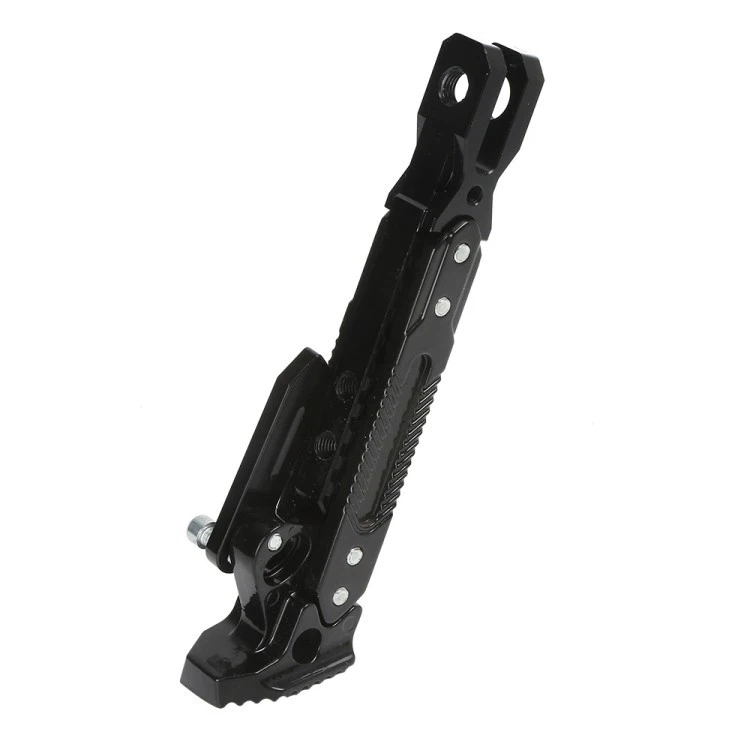
Some pedals are designed to be adjustable, allowing users to customize their position and angle for maximum comfort and efficiency. For example, adjustable footrest pedals in vehicles can be adjusted to accommodate different driver heights and leg lengths. In industrial settings, adjustable pedals can be used to optimize the ergonomics of machine operation, reducing the risk of repetitive strain injuries. Check out our Adjustable Cnc Aluminum Foot Brace Side Stand Kickstand For Motorcycles New Condition Resistant Bracket, which provides an adjustable and durable solution for motorcycle riders.
Universal Pedals
Universal pedals are designed to be compatible with a wide range of equipment. These pedals are often used in aftermarket modifications or for equipment that requires a flexible solution. For motorcycles, a Universal Motorcycle Modification Accessories Single Leg Support Assembly with Spring Pedal can be a great addition, providing a versatile and easy - to - install solution for different motorcycle models.
Conclusion and Call to Action
As you can see, pedals are incredibly versatile components that serve a wide range of functions in various industries. Whether you're in the automotive, industrial, fitness, or any other sector, having the right pedals can make a significant difference in the performance, safety, and comfort of your equipment.
At our company, we understand the importance of high - quality pedals. That's why we offer a wide range of pedals designed to meet the diverse needs of our customers. From automotive pedals to specialized industrial and fitness pedals, we have the products you need to keep your equipment running smoothly.
If you're interested in learning more about our pedal products or have any specific requirements, we invite you to reach out to us for a采购洽谈 (translation note: this is placeholder text as you said not to create contact details, should be replaced with proper call to action in real - world scenario). Our team of experts is ready to assist you in finding the perfect pedals for your application.
References
- Automotive Engineering Handbook, Society of Automotive Engineers
- Industrial Machinery Design and Operation Manual, American Society of Mechanical Engineers
- Fitness Equipment Technology Guide, International Fitness Equipment Manufacturers Association


