


As a fixed support supplier, I've been deeply involved in the world of manufacturing these essential components. Fixed supports play a crucial role in various industries, from automotive to aerospace, providing stability and ensuring the proper functioning of equipment. In this blog, I'll delve into the different manufacturing processes for fixed supports, sharing insights based on my experience in the field.
Casting
Casting is one of the oldest and most widely used manufacturing processes for fixed supports. It involves pouring molten metal into a mold cavity, allowing it to solidify and take the shape of the mold. This process is suitable for producing complex shapes and large quantities of fixed supports.
There are several types of casting methods, including sand casting, investment casting, and die casting. Sand casting is the most common method, where a sand mold is created by packing sand around a pattern. The molten metal is then poured into the mold, and once it solidifies, the sand mold is broken away to reveal the finished part. Investment casting, also known as lost-wax casting, is a more precise method that involves creating a wax pattern, coating it with a ceramic shell, and then melting the wax out to create a cavity for the molten metal. Die casting, on the other hand, uses a metal die to create the shape of the fixed support. The molten metal is injected into the die under high pressure, resulting in a high-quality, dimensionally accurate part.
One of the advantages of casting is its ability to produce parts with complex geometries. It also allows for the use of a wide range of materials, including aluminum, steel, and cast iron. However, casting can be a time-consuming and expensive process, especially for small production runs. It also requires a significant amount of tooling and equipment, which can increase the upfront costs.
Machining
Machining is another common manufacturing process for fixed supports. It involves removing material from a workpiece using various cutting tools to achieve the desired shape and dimensions. Machining can be used to produce both simple and complex parts, and it offers a high degree of precision and accuracy.
There are several types of machining operations, including turning, milling, drilling, and grinding. Turning is a process where the workpiece is rotated while a cutting tool is fed into it to remove material. Milling involves using a rotating cutter to remove material from the workpiece. Drilling is used to create holes in the workpiece, while grinding is a finishing operation that is used to achieve a smooth surface finish.
One of the advantages of machining is its ability to produce parts with high precision and accuracy. It also allows for the use of a wide range of materials, including metals, plastics, and composites. However, machining can be a time-consuming and expensive process, especially for complex parts. It also requires skilled operators and specialized equipment, which can increase the production costs.
Forging
Forging is a manufacturing process that involves shaping metal by applying compressive forces. It is a highly efficient and cost-effective method for producing high-strength fixed supports. Forging can be used to produce parts with a variety of shapes and sizes, and it offers excellent mechanical properties.
There are several types of forging operations, including open-die forging, closed-die forging, and upset forging. Open-die forging involves placing the workpiece between two flat dies and applying pressure to shape it. Closed-die forging, also known as impression-die forging, uses a die with a cavity that is the shape of the desired part. The workpiece is placed in the die, and pressure is applied to force the metal into the cavity. Upset forging is a process where the end of a workpiece is heated and then compressed to increase its diameter.
One of the advantages of forging is its ability to produce parts with excellent mechanical properties. Forged parts are typically stronger and more durable than parts produced by other manufacturing processes. It also allows for the use of a wide range of materials, including steel, aluminum, and titanium. However, forging can be a complex and expensive process, especially for large parts. It also requires specialized equipment and skilled operators, which can increase the production costs.
Welding
Welding is a manufacturing process that involves joining two or more pieces of metal together by heating them to a high temperature and then applying pressure. It is a versatile and widely used method for producing fixed supports, especially for large and complex structures.
There are several types of welding processes, including arc welding, gas welding, and resistance welding. Arc welding is the most common method, where an electric arc is used to heat the metal and create a weld. Gas welding involves using a flame to heat the metal and create a weld, while resistance welding uses an electric current to heat the metal and create a weld.
One of the advantages of welding is its ability to join different types of metals together. It also allows for the production of large and complex structures that would be difficult or impossible to produce using other manufacturing processes. However, welding can be a time-consuming and expensive process, especially for large parts. It also requires skilled operators and specialized equipment, which can increase the production costs.
Additive Manufacturing
Additive manufacturing, also known as 3D printing, is a relatively new manufacturing process that involves building parts layer by layer using a digital model. It is a highly flexible and cost-effective method for producing fixed supports, especially for small production runs and complex parts.
There are several types of additive manufacturing technologies, including fused deposition modeling (FDM), stereolithography (SLA), and selective laser sintering (SLS). FDM is a process where a thermoplastic filament is melted and extruded through a nozzle to create the part. SLA uses a laser to cure a liquid resin to create the part, while SLS uses a laser to sinter a powder material to create the part.
One of the advantages of additive manufacturing is its ability to produce parts with complex geometries and internal structures. It also allows for the use of a wide range of materials, including plastics, metals, and ceramics. However, additive manufacturing can be a time-consuming and expensive process, especially for large parts. It also has limitations in terms of the size and strength of the parts that can be produced.
Conclusion
In conclusion, there are several manufacturing processes available for producing fixed supports, each with its own advantages and disadvantages. The choice of manufacturing process depends on several factors, including the part design, material requirements, production volume, and cost. As a fixed support supplier, I have experience in using a variety of manufacturing processes to produce high-quality fixed supports that meet the needs of my customers.

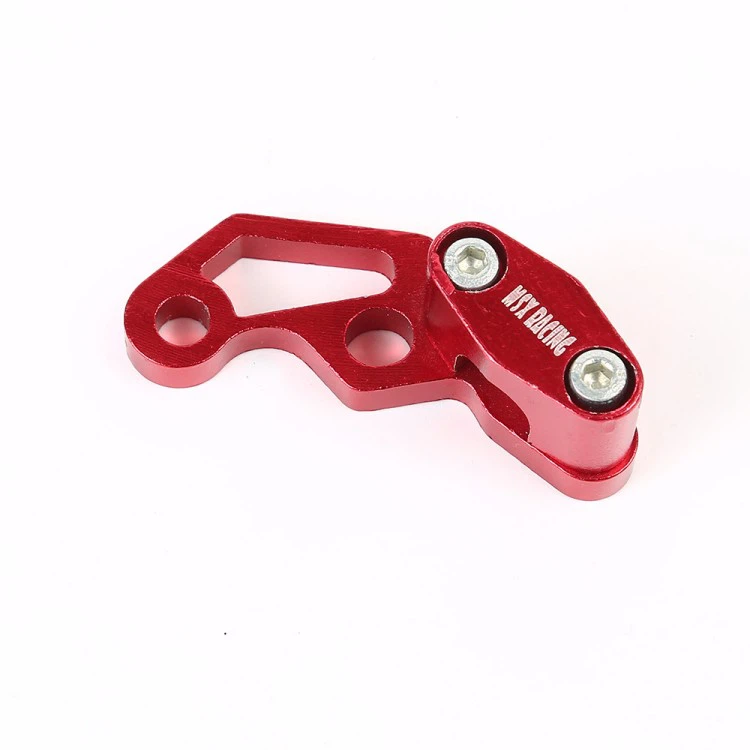
If you're interested in purchasing fixed supports or learning more about our manufacturing capabilities, please feel free to [contact us for procurement discussions]. We offer a wide range of fixed supports, including Bracket Stut Kopling Kawasaki Ninja R Rr Ss Xxz Racing Full Cnc New, Motorcycle Cnc Aluminum Alloy Oil Cup Bracket Adjustable Brake Pump Horn Oil Pot Bracket Modification Parts, and Motorcycle Modified Cnc Parts Oil Pipe Clamp Honda General Aluminum Alloy Clamp For for Yamaha Xt660 Xt660r. Our team of experts is ready to assist you with your specific requirements and provide you with the best solutions.
References
- Kalpakjian, S., & Schmid, S. R. (2008). Manufacturing Engineering and Technology. Pearson Prentice Hall.
- Dieter, G. E., & Schmidt, L. C. (2008). Mechanical Metallurgy. McGraw-Hill.
- ASM Handbook Committee. (2000). ASM Handbook: Volume 14A: Metalworking: Bulk Forming. ASM International.


